Shopping for plus size ethnic wear should not mean settling for whatever happens to fit. For a long time, plus size shoppers had a narrow set of choices, mostly the same silhouette in a slightly bigger size, without much thought given to proportion or comfort.
That has changed. Indian ethnic wear brands now offer a wider range of cuts, fabrics, and lengths designed for different body types, rather than simply scaling up smaller sizes. Whether you're dressing for a wedding, a festival, or a regular workday, there are far more options today for finding well-fitting, comfortable Indian wear.
This guide covers what actually affects fit, how to measure yourself correctly before ordering, which plus size ethnic wear styles tend to work well, and how to fix the fit problems plus size shoppers run into most often.
How to Measure Yourself Before You Shop
Most fit issues with ethnic wear trace back to one thing: shopping by size label instead of by measurement. Sizing isn't standardized across Indian ethnic wear brands, so a size XL from one label can fit completely differently from an XL at another.
Before browsing, take these four measurements with a soft measuring tape, worn over light clothing:
-
Bust: Measure around the fullest part of your chest, keeping the tape level and snug but not tight.
-
Waist: Measure around your natural waistline, usually just above the navel.
-
Hips: Measure around the fullest part of your hips and seat.
-
Shoulder width: Measure across your back from the edge of one shoulder to the other; this is the measurement most shoppers skip, and the one most likely to make a kurta feel tight through the arms even if the bust and waist fit fine.
Write these down and compare them directly against the brand's size chart in inches or centimeters, not against the size label. Also check whether the chart lists body measurements or garment measurements; the two aren't the same, and garment measurements (the actual size of the finished piece) will usually run 2 to 4 inches larger than your body measurement to allow room to move.
What to Look for in Plus Size Ethnic Wear
Once you have your measurements, a few construction details make the difference between an outfit that fits well and one that just fits.
Fit and size availability. Look for a brand with a genuine size range, ideally extending well past XL, rather than one or two extended sizes added as an afterthought.
Comfortable fabrics. Cotton, mul cotton, linen, and rayon breathe well and move with the body. Stiffer fabrics like heavy silk blends can look sharp in a photo but restrict movement once worn for several hours.
Silhouettes. A-line, straight-cut, and flared kurtas each sit differently on the body. Knowing how each one drapes matters more than picking based on the product photo alone.
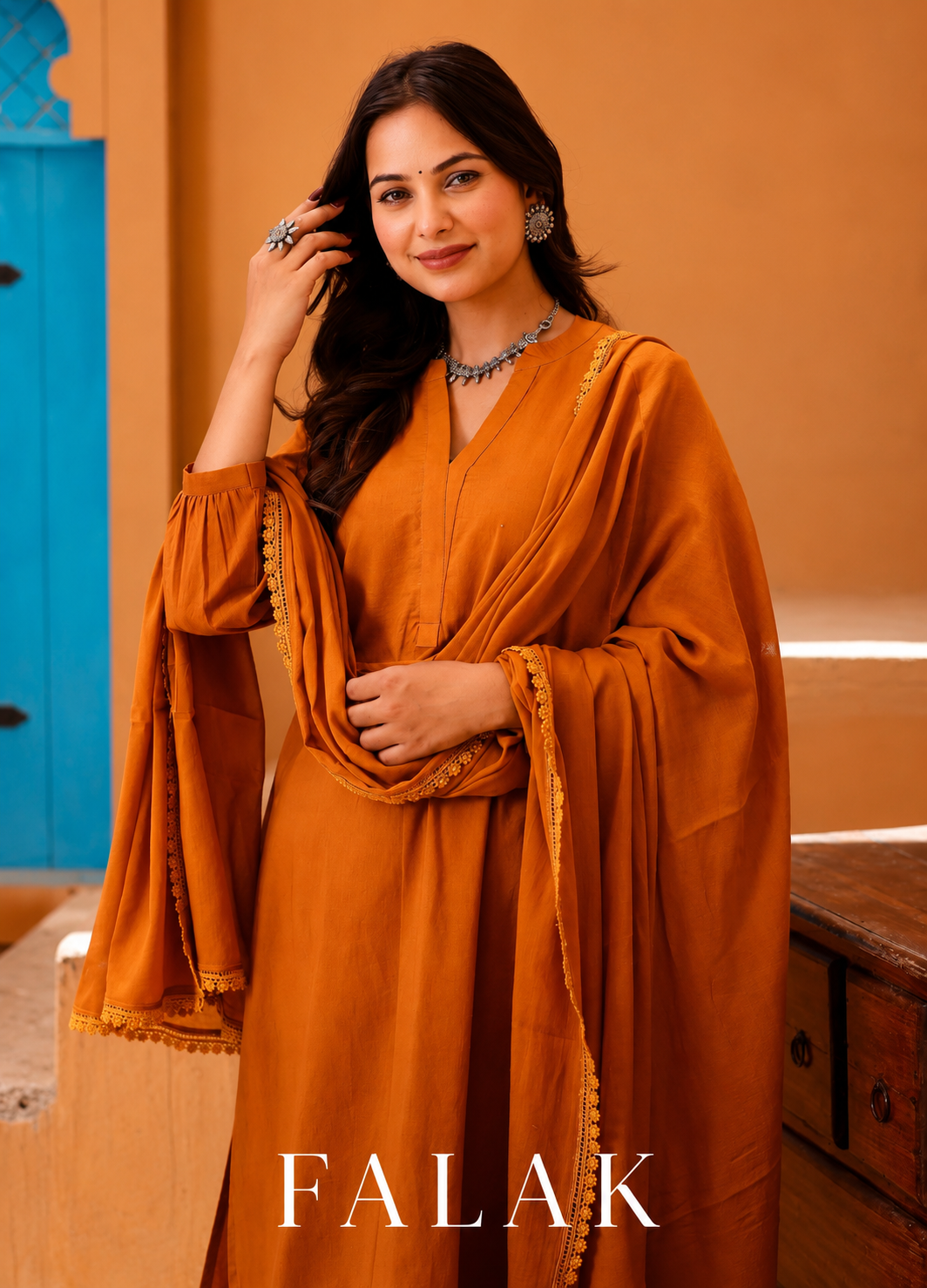
Necklines and sleeve styles. V-necks, sweetheart necklines, and three-quarter or bishop sleeves tend to balance the upper body without clinging at the underarm, which is one of the most common complaints with fitted sleeves.
Length and proportions. Longer kurtas, around calf-length, often create a cleaner line than shorter ones. This is a matter of preference, but it's worth trying both before assuming one works better.
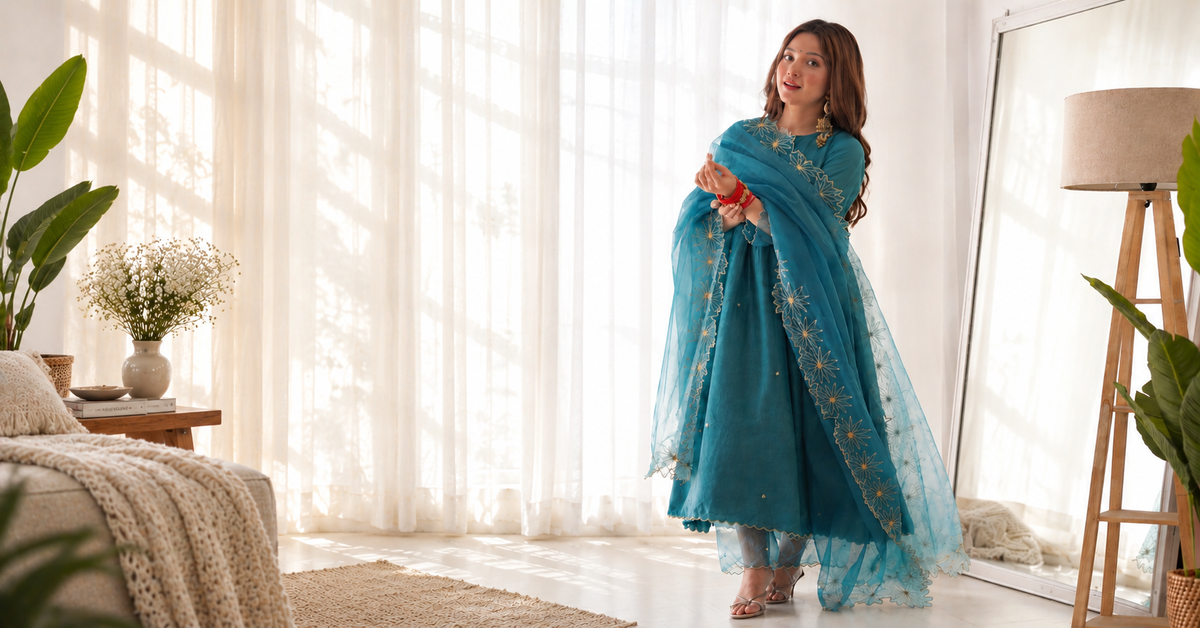
Ease of movement. Side slits, adjustable waist ties, and enough room through the shoulders make a real difference for a full day of festivities, especially in fitted Anarkali styles.
Common Fit Problems and How to Solve Them
A few issues come up repeatedly with plus size ethnic wear, and most have straightforward fixes.
-
Kurta rides up when sitting. Look for pieces with side slits rather than a fully stitched hem; slits give the fabric room to move without pulling the whole garment upward.
-
Sleeves feel tight at the underarm. Check the sleeve measurement separately from the bust measurement. Bishop and three-quarter sleeves generally sit looser here than fitted set-in sleeves.
-
Dupatta feels bulky over the shoulders. Drape it over one shoulder instead of both, and choose lighter fabrics like georgette or chiffon over heavier silks for warm-weather events.
-
Palazzos gape at the waist. Choose palazzos with an adjustable drawstring or elastic waistband rather than a fixed zip, since these adjust to your actual waist rather than a fixed size.
-
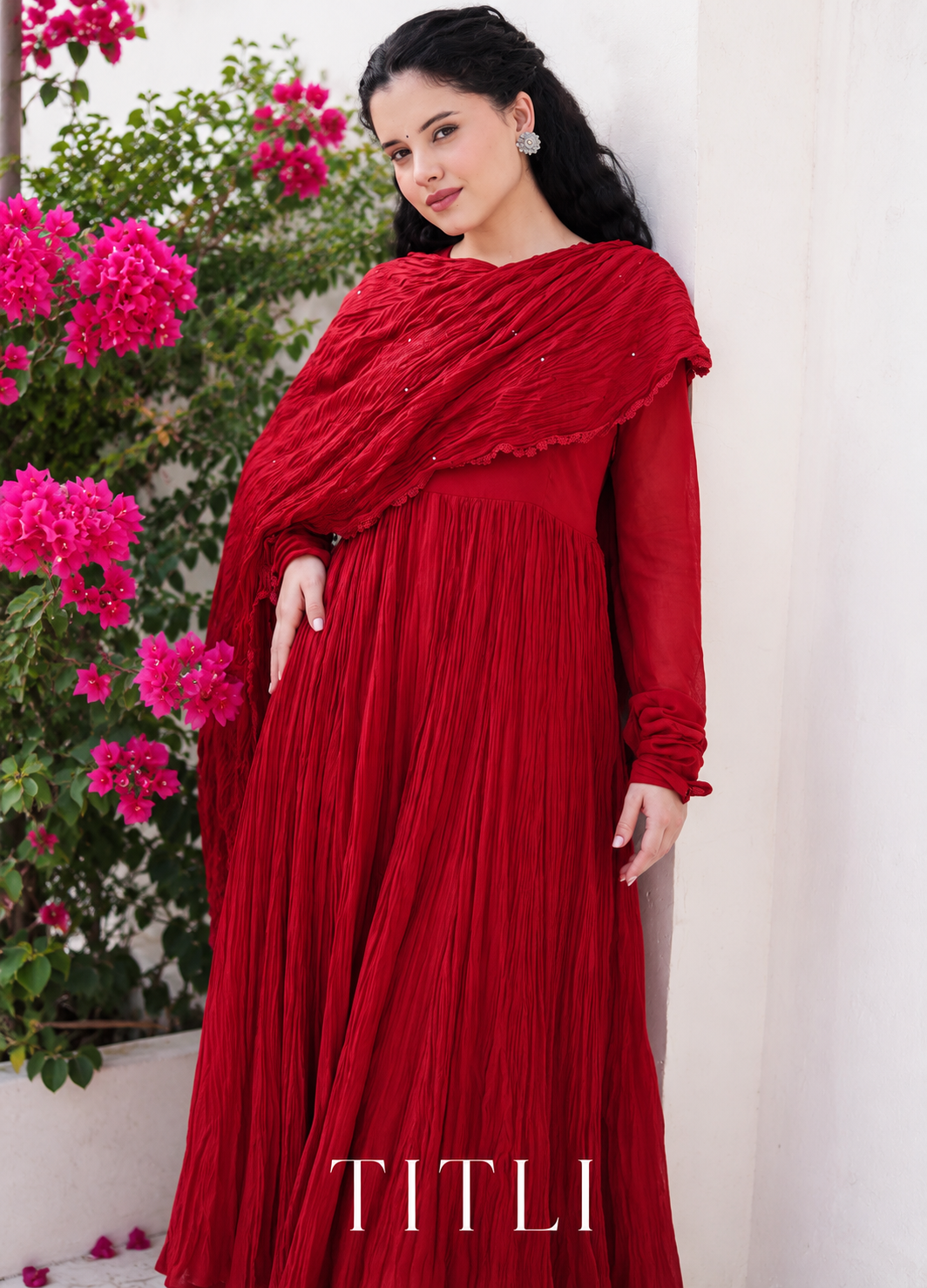
Anarkali flare adds bulk at the hips. Choose a flare that starts just below the bust rather than at the waist; a higher flare point elongates the torso instead of adding width at the widest part of the body.
Best Plus Size Ethnic Outfits for Women
Once you know what to look for, the next step is choosing a style that suits your body shape, comfort, and occasion. Here are some versatile options to consider: